Curriculum
The Navina Curriculum is structured to help practitioners build confidence through understanding human biology, instead of relying on routines.
More than techniques.
We start with touch biology. First and foremost, you learn how deeply hardwired we are for human touch and the responsibilities that carries. Then you learn the relevant anatomy and physiology, not only because it helps you work with more people, but also because it helps you really understand how you can read the responses of the body in the work we’re doing.
When we then begin working with techniques, your application is immediately more skillful and refined. Your work is steeped in attention, because you’re closely monitoring how the body responds to the pressure you’re applying and making adaptations and customizations to best match with the needs of your client.
Here, you’ll learn the importance of customizing every treatment with purpose. This is how manual therapy becomes therapeutic.
Curriculum Structure
Principal certification
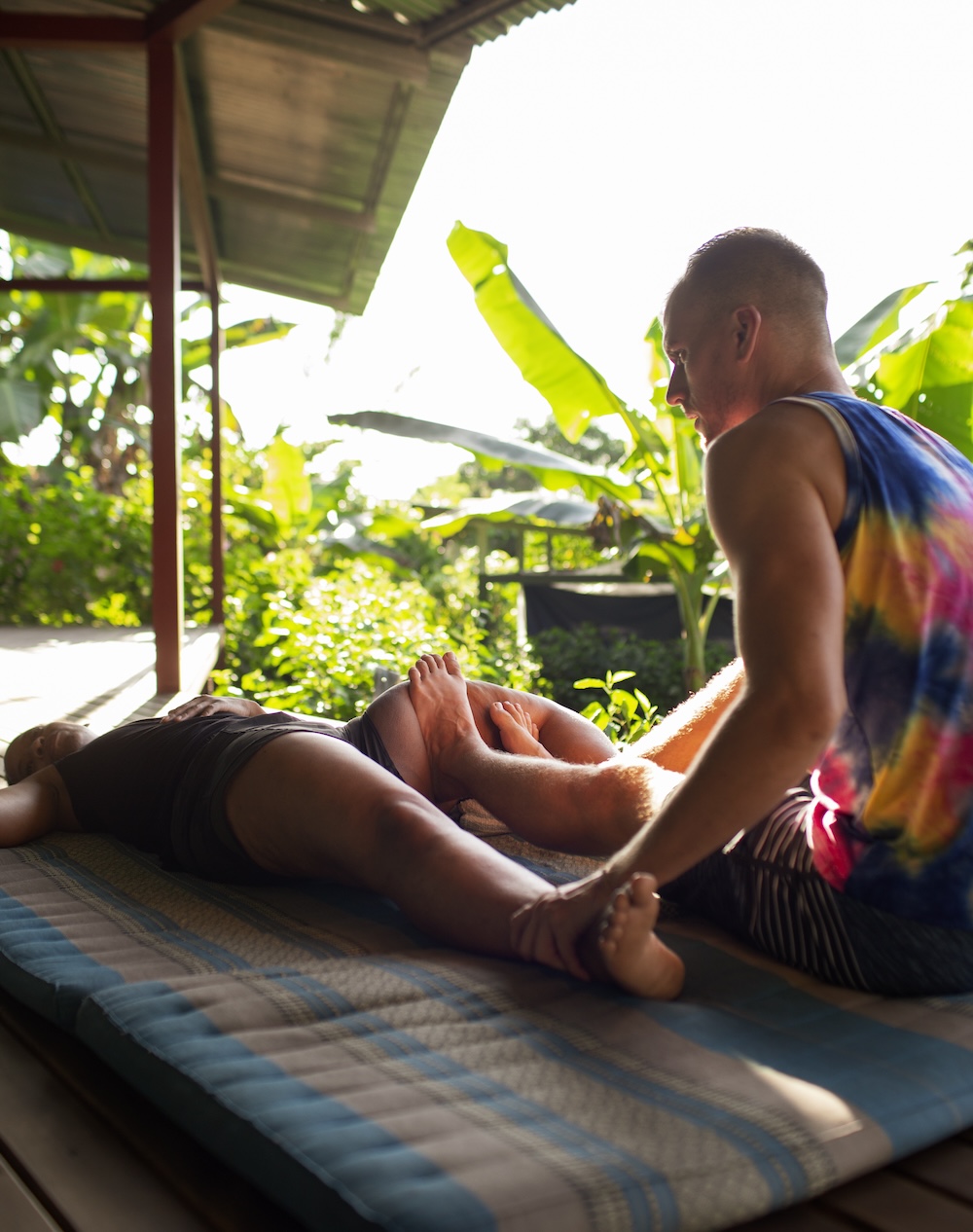
Modules 1, 2 & 3 combine to form our Principal Certification. Designed as a progressive learning experience, these modules build on one another to cultivate the practical skills, anatomical understanding, and the initial clinical reasoning needed to start building a confident and adaptable Thai massage practice.
Instead of counting the number of postures you’ll learn within these first 3 modules (or any of our courses), what’s more important to us is knowing that you’ll have experienced a glimpse of the infinite nuance to explore within each technique we take you through.
To receive Principal Certification, you must:
- Complete all required classroom hours for Modules 1–3.
- Complete the documented home practice requirements.
- Successfully pass the online certification assessment with a minimum score of 80%.
Enhanced Modules
Each Enhanced Module can be taken in any order. With the prerequisite of the completion of Modules 1, 2 & 3 (classroom time), you may join an Enhanced training.
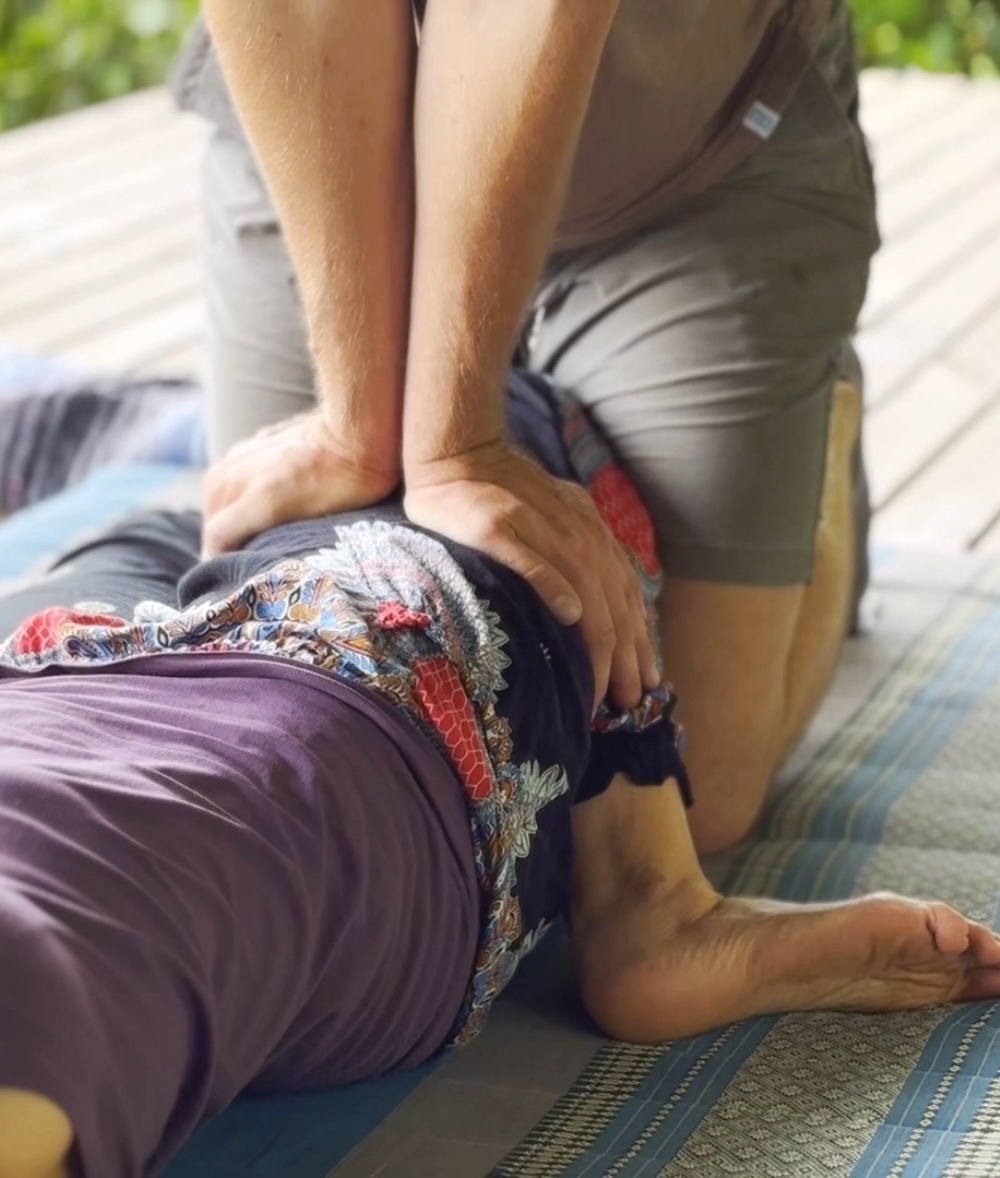
Think of the Principal Modules as your starting point. The Enhanced Modules are then meant to take you deeper into different elements of manual therapy. Each module adds more physical skills to your repertoire as well as a greater theoretical base for the expansion of your work.
Enhanced Modules include:
- Energy lines & the myofascia
- Side-lying series
- Expanding into knees & feet
- Ayurvedic approach
- Active body
- Posture play
Adjunct modules
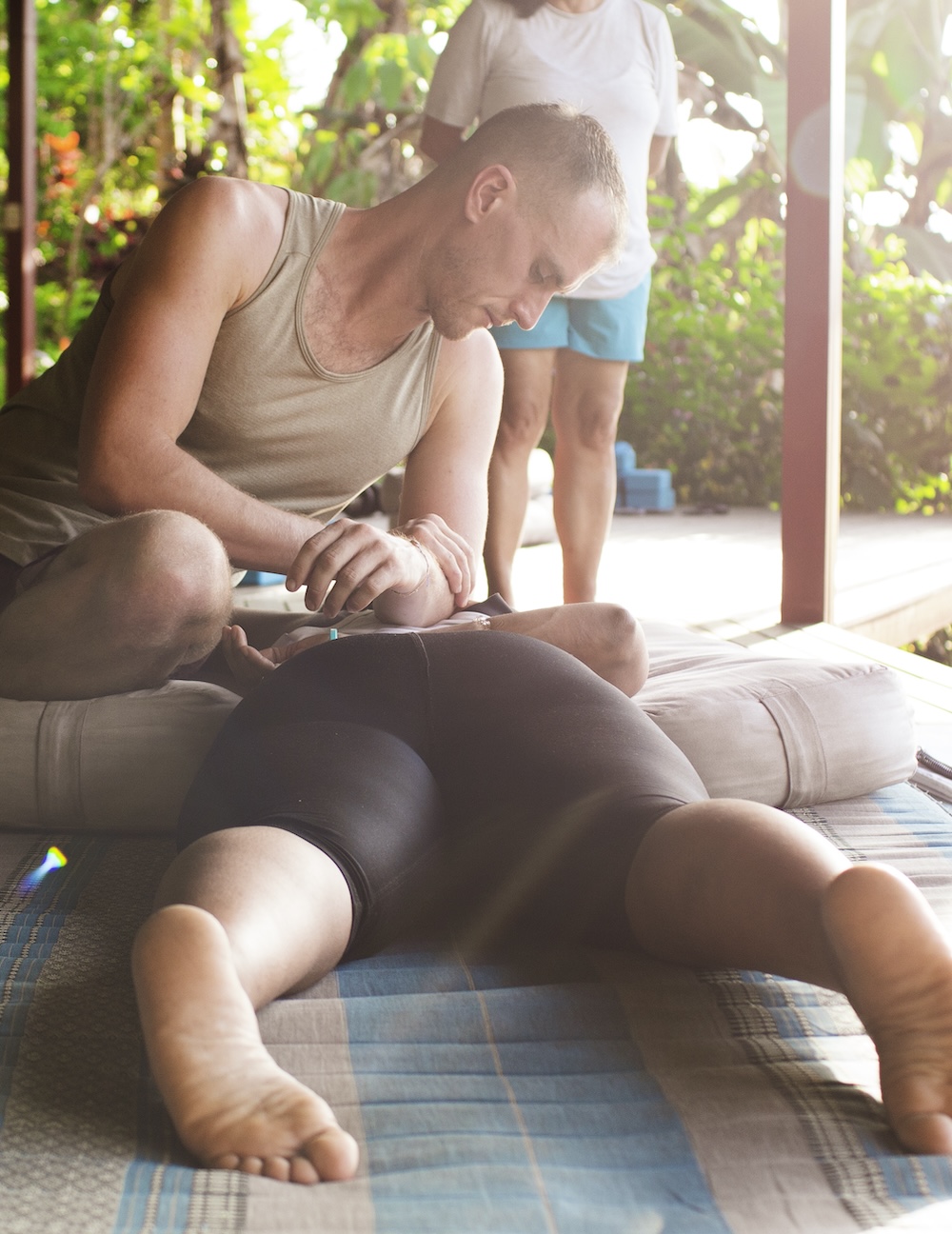
Adjunct Modules are standalone workshops designed to explore specific areas of Thai massage. Ranging from introductory experiences to immersive multi-day trainings, they offer flexible learning opportunities to anyone curious about this work.
Whether you’re taking your first steps into Thai massage or expanding an existing practice with new skills and perspectives, these workshops are a great way to get a taste of how we do things here at Navina.
Includes:
- Introductory workshops
- Immersions
- Thai yoga stretching for exercise professionals
- Thai on the table
- Restorative-Thai blend
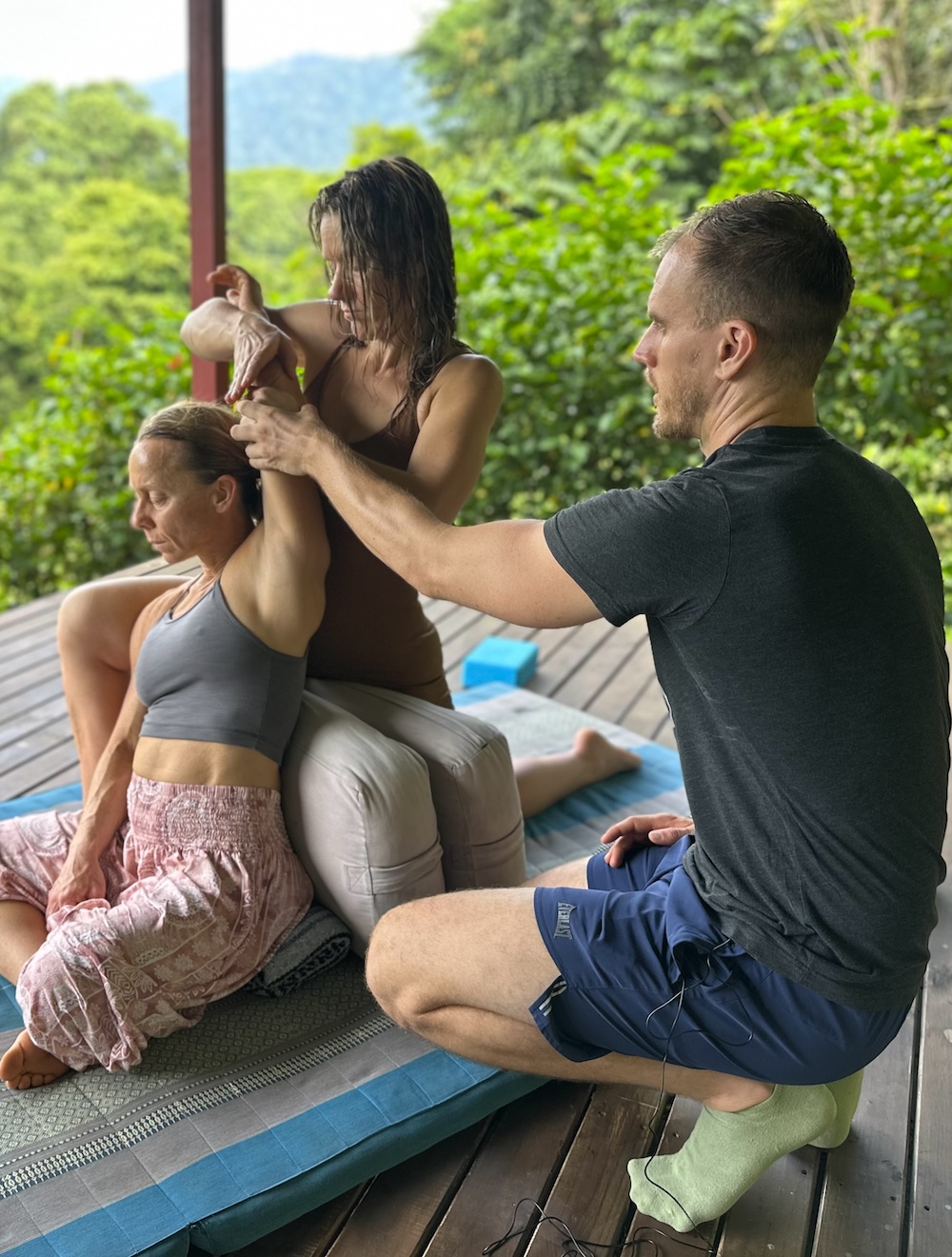
online coursework
Our online courses extend the Navina philosophy beyond the classroom, offering flexible, self-paced learning for practitioners, yoga teachers, and movement professionals. Some of our online courses are introductory, while others are for continuing education.
You can explore anatomy, physiology, Thai massage, and the science of touch through courses designed for the convenience of at-home study.
To explore our full online course suite, click/tap hereWant more detail? Here’s the Curriculum in Detail:
What we have above is just an overview of the curriculum. If you’re looking for more detail on the coursework we offer, keep reading below. Expand each section to get more information on each training we offer:
Module 1 establishes the foundations of the Navina curriculum, introducing the principles of Thai massage (as we practice it) alongside the anatomy, communication, and practical skills needed to begin working with confidence. Throughout this module you’ll begin developing a practical understanding of both the body and the language of touch, creating a strong foundation for the learning that follows.
During this module you’ll explore:
- The 4 foundational principles that underpin the Navina approach to Thai massage.
- Communication, rapport, and the practical considerations involved in preparing for work beyond the classroom.
- Essential anatomy and physiology, developing the language and understanding needed to identify major structures and describe how they function and how we access them.
- Efficient body mechanics and the application of consistent, effective touch that supports both practitioner and client.
- A foundational Thai massage sequence of approximately 60 minutes that integrates the concepts and techniques introduced throughout the module.
Module 2 builds on the foundations established in Module 1, reinforcing key concepts while expanding both your practical skills and your understanding of the human body. As movements and technqiues become more familiar, your attention can shift beyond remembering steps of getting you into each position toward refining touch, improving efficiency, and developing a smoother, more responsive treatment style.
By the end of this module, you’ll have expanded your treatment sequence to approximately two hours while continuing to strengthen the knowledge and confidence that underpin effective practice.
During this module you’ll explore:
- Practical foundations for building a sustainable Thai massage practice, including an introduction to business and professional development.
- A deeper understanding of anatomy and physiology, extending your knowledge to include the arms, hands, legs, and feet.
- Greater confidence using anatomical language to describe structures, movement, and function.
- Refining the quality of touch through repetition, observation, and thoughtful application.
- Smooth, efficient transitions between techniques to create a more seamless experience for both practitioner and client.
- Expanded Thai massage techniques that integrate naturally into a longer treatment sequence.
Module 3 brings the foundations of the Navina curriculum together, helping you integrate the knowledge and skills developed throughout the previous modules into a more adaptable, individualised approach to Thai massage. As your understanding deepens, the focus shifts from following a sequence to making thoughtful clinical decisions that respond to the unique needs of each person in an effort to provide the most beneficial experience possible.
By the end of this module, you’ll have developed a complete 3-hour Thai massage sequence and the confidence to adapt it with greater intention and reasoning. Completion of all Principal Certification requirements, including assessment, makes you eligible to apply for certification.
During this module you’ll explore:
- Greater fluidity, confidence, and personal expression as your practice evolves beyond memorisation toward adaptable, responsive care.
- A more comprehensive understanding of anatomy and physiology, strengthening your ability to apply anatomical knowledge in practice.
- Principles of treatment customisation, learning how to adapt both individual techniques and complete treatment sessions to suit different clients and and common pain presentations.
- The introduction of Sen Kalathari, exploring one of the major traditional pathways within Thai massage and its place within the broader practice.
- Abdominal massage, including its applications, considerations, and appropriate integration into treatment.
This enhanced module explores the relationship between the traditional Sen Kalathari pathway of Thai massage and contemporary understandings of myofascial anatomy. We investigate where these perspectives appear to overlap, where they differ, and how each can enrich our understanding of touch and manual therapy.
Building on previous training, this module introduces new techniques and perspectives that expand both your practical repertoire and your appreciation of Thai massage.
During this module you’ll explore:
- Approximately one additional hour of practical material that can be integrated into your existing treatments.
- The traditional concept of Sen Kalathari and its relationship to contemporary myofascial pathways.
- Techniques for working along these pathways using more myofascially-directed manual techniques (including pin-and-stretch, and sink-and-draw).
- Current perspectives on the anatomy and physiology of fascia, and the potential mechanisms underlying the myofascial approaches we hear so much about these days.
- Revisiting familiar techniques through the lens of Sen work, once again adding extra layers of nuance into your customisation practice.
The Side-lying series expands your ability to adapt your treatments for a wider range of people and clinical presentations. By exploring alternative positioning, you’ll develop practical strategies for working comfortably and effectively with clients who may not be well suited to being in supine or prone positions (at all or for extended periods).
This module equips practitioners with a versatile treatment sequence that enhances both client comfort and the accessibility of Thai massage.
During this module you’ll explore:
- A complete side-lying treatment sequence that adds approximately 90 minutes of new material, addressing the shoulders, back, hips, legs, and feet.
- Adapting Thai massage for pregnancy, older adults, larger-bodied clients, and others who may benefit from being positions on their side.
- Considerations for working safely during pregnancy, including appropriate applications, precautions, and contraindications (you may be surprised by this one).
- The thoughtful use of bolsters, pillows, and other props to improve comfort, support, and efficiency.
“Thai massage is as good to give as it is to receive.”
A core tenet of the Navina appraoch is creating a sustainable practice that supports both the practitioner and the client. Building on the biomechanical principles introduced throughout the curriculum, this module explores how expanding your use of “tools” can enhance comfort, efficiency, and depth of touch.
Through a heavy focus on the use of the knees, feet, and forearms, you’ll develop new ways of applying pressure and working with the body while refining your sensitivity and adaptability.
During this module you’ll explore:
- How these additional tools support greater customisation and allow you to adapt treatments more effectively to each individual.
- The effective use of the knees, feet, and forearms as additional tools for applying pressure and working with soft tissue.
- Developing sensitivity in these areas of the body, allowing you to offer a wide range of intensity from gentle to deeper pressure.
- Comparing different approaches within familiar postures, understanding when a new technique enhances, replaces, or complements existing methods.
- Approximately one additional hour of practical techniques to expand your treatment repertoire.
Ayurveda, often translated as the “science of life,” is an ancient tradition of understanding health, balance, and the relationship between the individual and their environment. This module introduces Ayurvedic concepts alongside Thai massage practice, offering another perspective through which to explore customisation.
By exploring the five elements, Doshas, and Vayus, you’ll develop a framework for considering the unique qualities of each person that comes to see you and how these perspectives may inform your approach to treatment.
During this module you’ll explore:
- The Ayurvedic concepts of the five elements, three Doshas, and the Vayus, and their traditional relationship to bodywork and Thai massage.
- How these new understandings can influence posture selection, treatment intention, and the overall experience of a session.
- The integration of approximately 45 minutes of additional massage material, including an expanded abdominal massage.
- Revisiting familiar postures from Modules 1–3 through an Ayurvedic lens and exploring how different perspectives can influence your practice.
Active bodies often have different movement demands, patterns of tension, and recovery needs. This module explores how Thai massage can be adapted for individuals who regularly engage in sport, training, and physical activity.
Through a combination of assisted stretching and an improved theoretical understanding of active bodies you’ll learn how to approach more active clients with greater confidence while also enhancing the effects of your work.
During this module you’ll explore:
- Understanding the role and scope of Thai massage when working with injuries, including when referral or additional assessment may be appropriate.
- Common patterns of tension and restriction found in more active populations, and how these may differ from those seen in more sedentary clients.
- Case studies exploring how different sports and movement practices influence the way we approach treatment.
- Approximately 90 minutes of additional techniques largely focused on assisted stretching, mobility work, and the different contexts in which we can use them.
- Strategies for working intelligently with stronger, more muscular, and often more physically demanding bodies while maintaining effective biomechanics.
Designed as one of the most advanced modules in the Navina curriculum, Posture Play is intended for experienced practitioners who have developed a strong foundation in Thai massage and are ready to explore greater creativity, greater technicality, and further refinement in their practice.
Rather than simply adding more techniques, this module goes deeper into how to develop a more responsive approach – creating treatments that evolve moment by moment based on the person in front of you.
During this module you’ll explore:
- Integrating the full range of techniques learned throughout your training into a more personalised and therapeutic approach.
- Advanced postures and the specific considerations required to make them safe, effective, and appropriate for experienced receivers.
- Detailed cues and technical refinements that enhance both giving and receiving more complex positions.
- Tuning in on a deeper level to the needs of the individual you’re working with.
We offer a variety of introductory workshops ranging in from 2-4 hours, where you are introduced to the fundamentals of a Navina-style of Thai massage. Through hands-on practice, you will learn a brief but powerful massage sequence, gaining first-hand experience in both giving and receiving this work.
Once you have learned the basics of Thai massage, you can share this beautiful gift with your family and friends. They will certainly appreciate it! Bring them along and you can swap massages when in need.
The immersion is an 8-hour/full-day experience, where you learn more techniques than what we can fit into the shorter time-frame of introductory workshops.
It’s the perfect taster for anyone thinking about joining Modules 1-3.
Movement professionals are often looking for effective ways to help clients improve mobility, recovery, and body awareness. This two-part, hands-on training introduces assisted stretching techniques inspired by Thai yoga therapy, providing practical tools that can be integrated into personal training, coaching, and movement education.
Designed for trainers, instructors, coaches, and other professionals working with active individuals, this course explores how to incorporate supported flexibility work into personalised movement programs.
During this module you’ll explore:
- Practical methods for integrating assisted stretching into existing coaching or training sessions.
- Principles of effective assisted stretching and how they can complement strength training and recovery.
- Full-body assisted stretching techniques inspired by Thai yoga therapy.
- Strategies for adapting this work to different bodies, different goals, and different movement backgrounds.
Thai massage is traditionally practiced on a floor mat, but the principles of this work can be adapted to many different treatment environments. This course explores how to bring Thai massage techniques into a table-based setting while maintaining the essence of the practice.
Designed for massage therapists, manual therapists, and Navina practitioners, this training provides practical tools for integrating Thai-inspired approaches into existing bodywork practices and creating a more accessible experience for a wider range of clients.
During this module you’ll explore:
- Integrating these techniques into your existing manual therapy approach
- Adapting Thai massage principles and techniques for a massage table environment.
- Positioning, body mechanics, table set-up, and practitioner strategies specific to table-based work.
- How table-based Thai massage can support clients who prefer an alternative to traditional floor-based practice.
Restorative yoga and Thai massage share a common appreciation for presence, support, and mindful connection. This course explores the integration of Thai-inspired manual therapy techniques with restorative yoga postures to create a deeply relaxing and supportive experience.
Designed primarily for yoga teachers and movement professionals, this training provides practical tools for creating specialised workshops that combine assisted touch, gentle movement, and restorative postures.
During this module you’ll explore:
- Principles of blending Thai-inspired touch techniques with restorative yoga practices.
- Supported postures and hands-on techniques designed to enhance relaxation, awareness, and connection.
- How to safely and confidently incorporate touch into restorative yoga settings.
- Workshop structures and practical approaches for creating your own Restorative-Thai experiences.
- Ways to adapt these practices for different groups, settings, and participant needs.
Available as both an online course and an in-person training experience.
The Navina curriculum is designed to grow with you and your needs as a practitioner. And whether you’re taking your first steps into Thai massage, expanding your skills through specialised workshops, or continuing your professional development, each learning pathway comes from the same philosophy: leading with an understanding of human biology, approaching the practice with curiosity before certainty, and embodying adaptability over routines.
Some questions we often get:
Can I begin with an Enhanced or Adjunct Module?
Adjunct Modules are open to everyone. However, our Enhanced Modules are only accessible to those who have taken part in at least the classroom portion of Modules 1-3 inclusive.
Do I need previous massage experience?
To begin with Modules 1-3, or with the Adjunct Modules, there are no pre-requisites. You can be an absolute beginner. You don’t need any previous experience in manual therapy to dive in and take these courses with us. We begin each of the courses in those two categories with an understanding that not everyone has the same background, and so we establish the essentials before getting into the rest of the content.
How long does it take to complete the Principal Certification?
We now almost exclusively run Modules 1-3 in an intensive format, so beyond completion of the classroom time in the intensive, you have a full year to complete your documented practice sessions and sit the exam online. The exact time then depends on how quickly you get through the at-home portion.
Can I repeat modules?
Most definitely – in fact, many students who have ended up coming back years later, have mentioned that they have found it incredibly valuable in being able to embody more of the details of the practice, since they no longer have to focus so much on the foundational pieces of the practice, and can instead focus more energy on the extra details and nuances. Auditing (repeating) modules can be done for a 50% course discount.
Ready to begin?
Whether you’re exploring Thai massage for the first time or looking to deepen an existing practice, our training pathways are designed to meet you where you are and help you continue growing.